What color temperature is best for a child's night light? The answer usually begins with warmer, dimmer light. Many sleep specialists recommend amber, red, or warm-white lighting between 1800K and 2700K. These tones resemble candlelight rather than morning daylight. They can provide comfort while reducing the stimulating effect of blue-rich light before sleep.
“Light is the most powerful cue for our circadian rhythms,” explains Dr. Mariana Figueiro, a lighting researcher and director of the Mount Sinai Light and Health Research Center. Her work highlights why a bright, cool-white lamp may feel harsh beside a child’s pillow. A soft 2200K glow can make shadows visible without turning the bedroom into a brightly lit playroom. Keep it low.
Still, color temperature is not the whole answer. Brightness, distance, timing, and a child’s sensitivity also matter. A warm lamp placed across the room may work better than a dim lamp beside the face. Some children relax under red light, while others dislike its unusual appearance. There is no universal setting, and that is worth admitting. Parents should observe bedtime behavior, adjust one feature at a time, and avoid treating one recommendation as medical advice. This guide compares five practical color temperatures, from candle-warm amber to gentle warm white, so families can choose more thoughtfully.
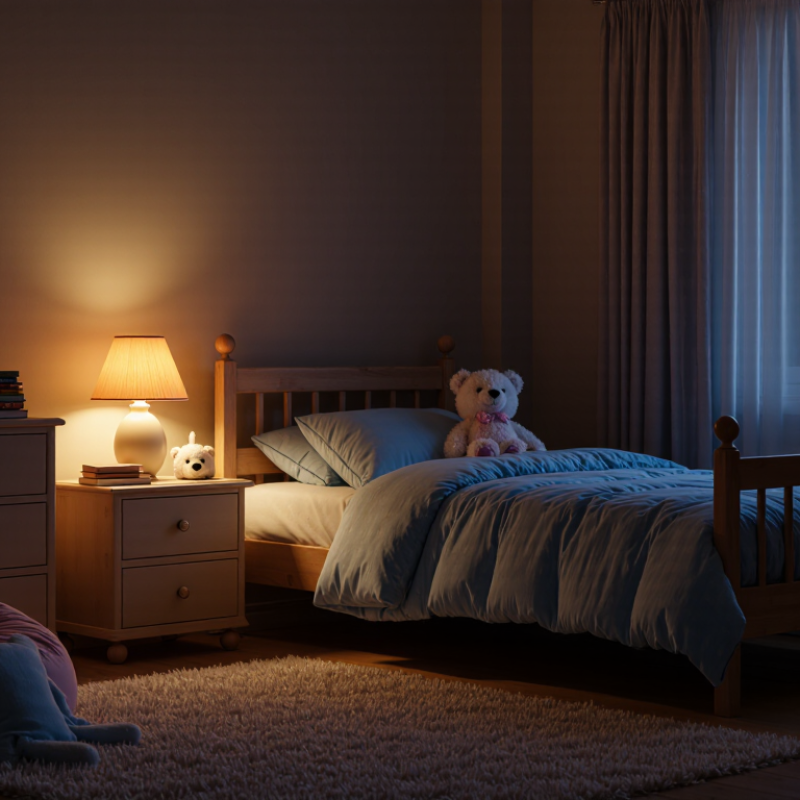
Understanding Color Temperature in Child Night Lights
5 Best Color Temperatures for a Child Night Light?
Understanding Color Temperature in Child Night Lights
Color temperature describes how light appears, measured in Kelvin (K). For children, warmer light usually feels calmer and creates less visual stimulation before sleep. Around 1800–2200K produces a gentle amber or red glow. It works well during nighttime feeding or quick comfort checks. The room should remain dim, not brightly lit.
A 2200–2700K light gives a soft, candle-like warmth. This is often a practical choice for a child’s bedroom.
Around 2700–3000K provides warm yellow light for reading a short story.
A 3000–3500K setting may help with quiet play, but it can feel too alerting near bedtime. Dimmable warm white is useful when one light serves several routines.
Color temperature is only one part of the decision. Brightness, placement, and timing matter too. Keep the light away from the child’s direct eye line. A low position near the floor can reduce glare and harsh shadows. Avoid cool blue-white light, especially above 4000K, during the sleep period. Sleep research commonly links evening blue-enriched light with reduced melatonin release, although individual responses vary.
In practice, children differ. Some relax under amber light, while others dislike red tones. I would test the lowest comfortable brightness for several evenings. A child may still wake often, even with ideal lighting. That does not mean the light failed. Observe behavior, adjust gently, and ask a pediatric professional about persistent sleep concerns.
The Five Best Color Temperatures for Different Bedtime Needs
5 Best Color Temperatures for a Child Night Light?
The Five Best Color Temperatures for Different Bedtime Needs
A child’s night light should feel gentle, predictable, and easy to adjust. In my experience, warmer light supports calmer bedtime routines than bright white light. Color temperature is measured in Kelvin, or K. Lower numbers usually look warmer and more amber.
Around 1800K suits children who wake easily or dislike complete darkness. It resembles a dim candle and creates very little visual stimulation. Around 2200K works well for reading a short story before sleep. Keep the brightness low, because warm light can still become distracting when intense. Around 2700K offers a balanced choice for bedtime routines, bathroom trips, and quiet reassurance. It looks like a soft household bulb.
Around 3000K may help older children pack away toys or move safely around the room. However, it can feel too alerting for sensitive sleepers. Around 4000K is the least suitable option for overnight use, but it can help during early-morning waking when a child needs clearer visibility. Cooler light often contains more blue energy, which may interfere with natural sleep signals when used brightly or for long periods.
Keep the lamp below eye level. Avoid shining it toward the pillow. A dimmer setting matters as much as the Kelvin rating. Children also respond differently; one child may relax under 2700K, while another needs 1800K. My own preference would change after observing sleep, shadows, and nighttime fears for several evenings. Temperature labels are useful, but they are not perfect.
5 Best Color Temperatures for a Child Night Light
Warmer light contains less short-wavelength blue light than cooler light. For bedtime, choose the lowest practical brightness and avoid direct exposure to bright, cool-white light.
The five temperatures range from candle-like amber to cool white. The relative coolness index is a simple comparison scale based on color temperature, not a measurement of spectral power or brightness.
Choosing the Right Light Color by a Child’s Age
For infants, darkness is usually preferable, with a very dim 1800K amber light only for feeding or diaper changes. The American Academy of Pediatrics recommends 12–16 hours of sleep for babies aged four to twelve months, including naps (AAP, 2022). A bright lamp can make nighttime care feel like daytime. Keep it low and indirect.
Toddlers often respond well to 1800K or 2200K, which resembles candlelight. Preschool children may prefer 2200K–2700K, offering gentle visibility without a harsh white appearance.
For school-age children, 2700K is a practical bedtime choice; 3000K can support quiet reading before the lights go lower. Children aged six to twelve need 9–12 hours of sleep, according to the AASM consensus report endorsed by the AAP (2016). Color temperature is not the whole story. Brightness and exposure time matter greatly.
A 4000K light suits daytime homework, not a sleep-focused bedroom. The CIE Position Statement on light and sleep (2019) explains that short-wavelength-rich light can affect circadian timing, especially in the evening. That does not prove every cool lamp disrupts every child. Individual sensitivity varies. In practice, choose the lowest brightness that allows safe movement, place the light away from the pillow, and use a timer. Some children still need a little light. That is normal. I would avoid claiming one perfect setting, because age, fear, room layout, and bedtime habits all change the result.
Safe Placement and Nighttime Use of a Child Night Light
5 Best Color Temperatures for a Child Night Light?
Choosing a child night light involves more than color preference. Evidence does not identify one perfect setting. The CIE 2019 position statement reports that evening light can influence circadian timing, especially when blue-rich and bright. For bedtime, consider five practical options: 1800K amber, 2000K deep amber, 2200K warm orange, 2700K warm white, and 3000K soft white. Amber tones usually feel calmer. A dim 2200K light may support nighttime care without turning the room into daytime. I would avoid cool white settings near 4000K or higher. They can appear harsh and stimulating.
Placement matters just as much. Keep the light outside the crib, cot, or bed, and place it where the child cannot pull it down. The American Academy of Pediatrics’ 2022 safe-sleep policy advises keeping cords and loose objects away from infants’ sleep spaces. Use a short, secured cable, or choose a cordless design. Do not attach a light to rails or hang it above the mattress. Aim it toward a wall or floor, not directly at the child’s eyes. Check for heat after several hours. Small details matter.
Tips: Start at 2200K and the lowest comfortable brightness. Observe sleep for one week. If the child wakes more often, dim it further or move it farther away. I have found that “barely visible” often works better than bright comfort lighting. Still, every child responds differently, and this remains an area where personal observation matters.
5 Best Color Temperatures for a Child Night Light? - Safe Placement and Nighttime Use of a Child Night Light
| Rank |
Color Temperature |
Visual Appearance |
Best Use During the Night |
Sleep-Friendly Considerations |
Safe Placement and Use |
| 1 |
1,800–2,200 K
|
Deep amber to reddish-orange |
Comfort lighting for children who need a very dim glow or reassurance after lights-out. |
Contains relatively little short-wavelength blue light and is less likely to feel stimulating than cool white light. |
Use the lowest brightness that still provides reassurance. Keep the light out of the child’s bed and away from bedding, curtains, and other flammable materials. |
| 2 |
2,200–2,400 K
|
Warm amber or candle-like |
General overnight use, hallway visibility, or brief caregiver checks. |
A warm, dim output can provide visibility while avoiding the alerting appearance of blue-rich light. |
Place it on a stable surface where the child cannot pull it down. Avoid positioning it directly beside the child’s face. |
| 3 |
2,700 K
|
Traditional warm white |
Storytime, bedtime routines, and children who prefer a softer white glow. |
Warmer than standard neutral or cool white lighting, but brightness should still be kept low before and during sleep. |
Use a timer or dimmer when available. Keep plugs, cords, and power adapters inaccessible to young children. |
| 4 |
3,000 K
|
Soft warm white |
Short bedtime reading or changing clothes when a little more visual clarity is needed. |
Provides clearer color rendering than amber light, but it is generally better for a brief routine than for continuous high-brightness use overnight. |
Angle the light toward the floor or wall rather than the pillow. Turn it down or off once the child is settled. |
| 5 |
3,500–4,000 K
|
Neutral white |
Temporary tasks such as finding a lost item, checking an injury, or navigating safely after waking. |
Useful for visibility, but less suitable as an all-night sleep light because it appears more stimulating than warmer color temperatures. |
Use only when needed, keep the brightness modest, and switch it off after the task. Never place a hot or enclosed lamp near fabric or soft furnishings. |
Practical safety note: Color temperature does not determine safety by itself. Choose a child-rated light with low heat output, stable construction, protected electrical parts, and no accessible small components. Keep the light dim, out of reach, and away from bedding, water, curtains, and tripping areas. If a child is afraid of darkness, a very dim warm or amber light is usually a reasonable starting point.
Conclusion
Choosing the right color temperature can make a child’s night light more comforting and sleep-friendly. What color temperature is best for a child's night light? In most cases, warm amber, soft red, or gentle orange tones are ideal because they create a calm atmosphere and are less likely to interfere with the body’s natural sleep signals. A warmer light may suit babies and toddlers, while older children may prefer a slightly brighter warm-white glow for reading or easing nighttime fears. The best choice depends on the child’s age, sensitivity, bedtime routine, and personal comfort.
Color temperature should always be balanced with brightness. Even a warm-colored light can be disruptive if it is too bright, so choose the lowest setting that provides reassurance and visibility. Place the night light away from the child’s direct line of sight, keep cords safely out of reach, and avoid positioning it near bedding or other materials that could become overheated. A steady, softly diffused light is generally more suitable than a harsh or flashing one.

 LuxPower Light