A dark hallway can feel narrower than it is, especially when a single ceiling fixture leaves the corners dim. The answer is not always a renovation. How to make a dark hallway brighter without hardwiring? Start with the light you already have, then add flexible options that suit the corridor’s shape, outlet access, and daily traffic.
This guide explores plug-in sconces, slim floor lamps, and battery-powered lights with motion sensors. A small lamp near a console may soften a shadow, while a mirror can reflect light toward a darker stretch of wall. Even changing a heavy, dark runner or adding a lighter paint color can make the space feel more open. Placement matters. Keep cords tucked safely along a wall, and avoid fixtures that obstruct the walking path. Check product instructions for mounting, charging, and bulb compatibility.
Small changes help.
Still, there is no universal fix. A long hallway with no nearby outlet needs a different plan from a short entry with a wall socket. Brightness, color temperature, and glare also affect comfort; a very cool bulb may feel harsh at night. The sections ahead compare practical, non-hardwired choices and explain where each works best. You can test one change at a time, notice what improves the space, and adjust. It may take a little trial and error.
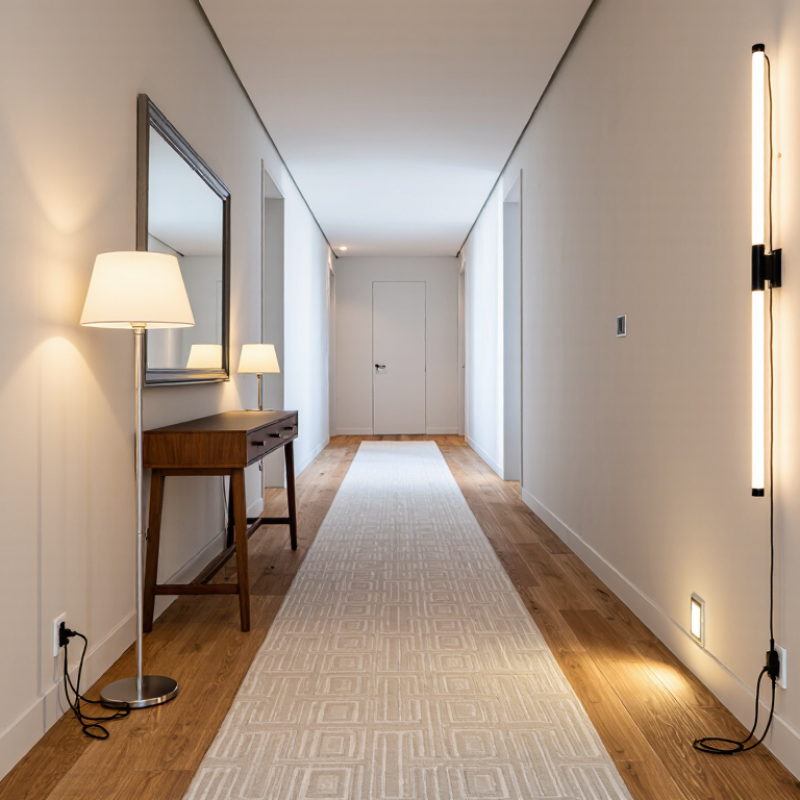
Before choosing a light, map the hallway’s shape and measure its length and width. Note doorways, turns, low ceilings, and spots where furniture narrows the walking path. A long, straight corridor may need several small pools of light; a short entry hall may brighten with one well-placed lamp. Measure it first. Notice where shadows fall during the day, too. A dark patch near a coat rack can feel more pronounced than the hallway’s overall brightness suggests.
Check every outlet, including those partly hidden behind furniture, and note how far each is from the darkest area. Keep plug-in lights and cords clear of doorways and walking routes; a bright hallway is not useful if someone can trip. If there is no convenient outlet, mark locations where battery-operated lights could be mounted without blocking doors or switches.
Look up, too. A ceiling fixture may cast shadows below shelves or a stair landing, while light from an adjacent room may help more than expected. Spend an evening observing the space before buying anything. I once underestimated how much a partly open door changed the shadows; that small detail was easy to miss.
A dark hallway often feels narrower than it is, so brightness matters as much as color. Choose warm-white light around 2700–3000K for a welcoming glow that still shows shoe colors and marks on the walls. Aim for even coverage instead of one harsh pool at the far end. Small space, big difference.
For a rental or a hallway without a nearby outlet, rechargeable, adhesive-mounted LED fixtures can add light without opening walls. Check the stated lumen output and beam spread: a long, narrow corridor may need several modest lights, while a short entry may work with one brighter fixture. Place them high enough to avoid shoulder bumps, but not so high that the floor stays dim. Motion sensors help when hands are full; test their range before mounting the lights.
Use a shade or diffuser to soften glare, especially where glossy paint or framed glass reflects light. If the hallway has a mirror, position the fixture to illuminate faces without shining directly into anyone’s eyes. Keep charging access practical, and follow the fixture’s mounting and battery instructions. There’s no perfect formula. Check the lighting at night, then adjust; adhesive lights can feel surprisingly bright against pale walls.
Choose bright, warm lighting that fits the space. These approximate illuminance targets offer a practical starting point for planning layered, plug-in or rechargeable lighting.
Quick guide: Aim for about 100–150 lux in a hallway, using warm-white light around 2700–3000 K for a welcoming feel. Plug-in sconces, rechargeable wall lights, or a slim floor lamp can add light without hardwiring. Actual brightness depends on room layout, fixture output, and surface colors.
A dark hallway rarely needs a wiring project. Plug-in sconces, slim floor lamps, or a table lamp on a narrow console can add light without opening walls. Choose fixtures with shades that direct light upward or across the ceiling; this softens harsh shadows near doorways. The U.S. Department of Energy reports that LED bulbs use at least 75% less energy and can last up to 25 times longer than incandescent bulbs. That makes an LED a practical choice for a fixture used every evening.
Placement matters. Put a lamp near the hallway’s darkest stretch, then check the floor from both ends. A warm bulb may feel welcoming, but too-dim light can leave shoes and stair edges hard to see. Keep cords tight to the wall with suitable cord clips, and never run them beneath rugs or across walking paths. It is not the prettiest detail. Still, it matters. The National Electrical Code requires flexible cords to be used according to their listing and not as permanent building wiring; a plug-in fixture should remain accessible and unplug when needed. If outlets are scarce, a listed multi-outlet adapter may help, but do not overload it. My first layout may still miss a shadow near the coat rack. Test the light at night, adjust the fixture, and reassess.
A dark hallway can feel dim even with a bright ceiling fixture, because narrow walls absorb or block much of its light. Reflective surfaces can help spread that light without new wiring. Place a mirror opposite a doorway or existing lamp, angled to bounce light down the corridor rather than into someone’s eyes. A pale, satin-finish wall can also reflect more light than a deep, matte color. Small change. Big difference. Avoid facing a mirror toward a bare bulb; the reflected glare can make the space feel harsher, not brighter.
The Illuminating Engineering Society’s Lighting Handbook gives common interior reflectance benchmarks of about 80% for ceilings, 50% for walls, and 20% for floors. These are design reference values, not guarantees for every hallway. A useful starting point is therefore a light ceiling and walls, with a mirror or framed glass positioned to catch existing light. Keep the floor matte and slip-resistant; a glossy surface may create distracting reflections. Try one change at a time, then check the corridor at night from both ends. It may still feel uneven, especially around doors or corners. Reflective surfaces redirect available light; they do not create more of it.
A dark hallway often needs better placement, not a brighter fixture. Try a rechargeable wall light near the entry, then test it from both ends of the corridor. Aim the beam toward the floor and nearby walls, rather than directly into someone’s eyes. Keep lights clear of coat hooks and door swings. A small shift can remove a stubborn shadow. I learned that the hard way.
Tips: Put motion sensors where they can detect someone approaching, not just passing beneath them. Set the timer long enough to reach the next room without rushing. Keep switches or touch controls within easy reach, especially near bedroom doors. Check that adhesive mounts hold firmly on your wall surface, and follow the light’s instructions for charging and installation.
For stairs or uneven flooring, use steady lighting and avoid placing lamps where they create glare or trip hazards. Test sensor settings at night; daylight can make a setup seem more reliable than it is. If the light turns on too late, adjust its angle or sensitivity. These small controls are easy to overlook, and some trial and error is normal. A hallway should feel clear to navigate, not like a row of spotlights.
| Lighting option | Suggested placement | Useful controls | Practical guidance | Safety and convenience notes |
|---|---|---|---|---|
| Rechargeable motion-sensor light | Mount on a wall or ceiling near the hallway entrance, aimed along the walking path. | Motion activation, adjustable timeout, and an always-on or off mode if available. | Choose a model with a stated light output suitable for the area; recharge it according to its instructions. | Test the sensor from both ends of the hallway. Keep the light and its mounting hardware clear of doors and walking space. |
| Battery-powered wall light | Place at eye level or slightly above, spaced to reduce dark gaps; avoid locations where it could be bumped. | Manual switch, remote control, or motion sensing, depending on the model. | Use more than one light in a long hallway if a single fixture leaves the far end dim. | Follow the manufacturer’s mounting instructions and check batteries regularly. |
| Plug-in lamp with a compact shade | Set on a stable console or shelf outside the main walking route, near an existing outlet. | In-line switch, timer, or compatible plug-in control. | Select a lamp and bulb that are compatible with each other and follow their stated wattage limits. | Route the cord against a wall and secure it with suitable cord clips; never run it across a walkway or under a rug. |
| Plug-in night-light | Use a low wall outlet near a doorway or along the route, where furniture will not block the light. | Dusk-to-dawn sensor or motion sensor. | Best for low-level orientation lighting; it may not provide enough light for the entire hallway. | Keep the outlet accessible and make sure the device does not obstruct adjacent outlets or switches. |
| Portable floor lamp | Position in a wide alcove or at the end of the hallway, away from doors and the walking line. | Foot switch, pull switch, or smart plug control. | A shade that directs light upward or outward can help brighten nearby walls and reduce harsh glare. | Choose a stable base and keep the cord secured along the edge of the room. |
| Removable battery-powered light bar | Attach beneath a shelf or along a wall section to fill a specific dark spot. | Touch control, remote, or motion activation, depending on the model. | Check whether the mounting method suits the wall surface and allows easy removal for charging. | Aim the light away from direct eye level and inspect adhesive or mounting parts periodically. |
Placement tip: Test each light after dark from both directions of travel. Adjust sensor range and shutoff time to reduce missed activations while avoiding unnecessary battery use.
Try a plug-in wall light, slim floor lamp, or table lamp on a narrow console. Aim light upward or across the ceiling to soften shadows.
LED bulbs use less energy and can last longer than incandescent bulbs. Choose enough brightness to see shoes and stair edges clearly.
Place it near the darkest stretch, then check the floor from both ends. A small shift may clear a shadow by the coat rack.
Use suitable cord clips to keep cords close to the wall. Never run them beneath rugs or across walking paths. It may look untidy.
A listed adapter may help, but do not overload it. Keep the plug-in fixture accessible so you can unplug it when needed.
Aim its beam toward the floor and nearby walls, not directly into someone’s eyes. Keep it clear of coat hooks and door swings.
Position the sensor where it detects someone approaching. Set the timer long enough to reach the next room without rushing. Test it at night.
Make sure adhesive mounts hold firmly, and follow the light’s charging and installation instructions. For stairs, use steady light and avoid glare or trip hazards. My first setup may still miss a shadow.
To understand How to make a dark hallway brighter without hardwiring?, start by checking the hallway’s length, corners, existing outlets, and the times of day it feels darkest. Choose bright, warm-toned lighting that suits the space without creating glare. Plug-in wall sconces, floor lamps, or compact table lamps can add useful light while keeping the existing wiring untouched; position them near dim areas and make sure cords stay clear of walking paths.
Reflective surfaces, such as mirrors or light-colored decor, can help distribute illumination and make a narrow hallway feel more open. Fine-tune the placement so light reaches corners and changes in floor level, and use convenient switches, timers, or adjustable controls to make everyday use easier. A thoughtful combination of suitable plug-in fixtures, reflective finishes, and safe placement can brighten the hallway without permanent electrical work.

LuxPower Light