How to Choose Sustainable Wooden Lamps in 2026?

Time:2026-11-07 Author:Ethan
0%

Why choose wooden lamps for a sustainable home interior? The answer depends on more than appearance. Wood can bring warmth and visible grain to a room, but a wooden shade alone does not make a lamp sustainable. Material sourcing, construction, repairability, and bulb efficiency matter too.

The scale of the challenge is clear. UNEP’s Global Resources Outlook 2024 reports that global resource extraction has more than tripled over five decades and could rise another 60% by 2060. UNEP and the Global Alliance for Buildings and Construction report that buildings and construction produced 37% of global energy- and process-related CO₂ emissions in 2022. A lamp is only a small part of that picture. Still, thoughtful choices count.

Architect Frank Lloyd Wright wrote, “Wood is universally beautiful to man. It is the most humanly intimate of all materials.” That is a compelling design observation, not proof of environmental benefit. For a 2026 purchase, look for traceable, responsibly sourced timber, durable joints, replaceable electrical components, and finishes that can be maintained. Check the details. A lightweight veneer lamp with unclear sourcing may not outperform a sturdy, repairable alternative. Nor does “natural” automatically mean low-impact. The right choice balances verified sourcing, long service life, efficient lighting, and a design you will want to keep. It is an imperfect calculation, but a useful one.
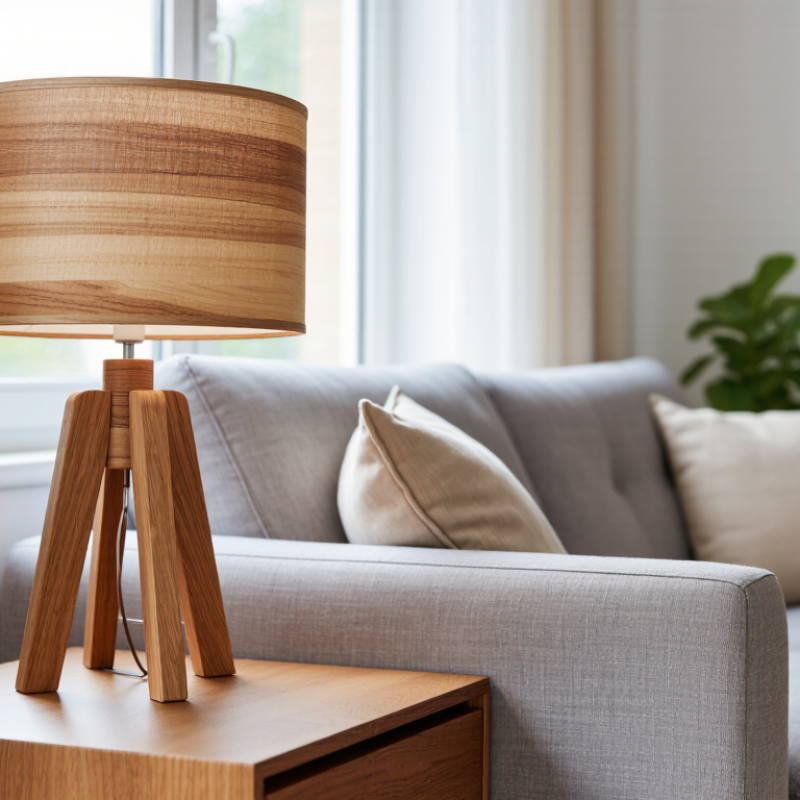
How to Choose Sustainable Wooden Lamps in 2026?

Understanding What Makes a Wooden Lamp Sustainable in 2026

In 2026, a wooden lamp is sustainable only when its materials, construction, and expected lifespan are considered together. Start by checking where the wood came from. Reclaimed timber can reduce demand for newly harvested wood, while responsibly managed wood should have clear sourcing information. Vague phrases such as “eco-friendly” are not proof. Ask what they mean.

Look closely at the lamp’s joints and surface. Solid, repairable construction can keep it useful for years, and replaceable parts matter when a switch or socket wears out. Choose finishes with clear ingredient information and avoid assuming that a natural-looking coating is harmless. A rough edge or visible grain is not a sustainability certificate.

The lighting components count, too. An efficient LED and a replaceable bulb or driver can reduce energy use and make repairs easier. Consider packaging and shipping, but weigh those details against durability; a locally made lamp that breaks quickly may not be the better choice. I would not treat a rustic finish as proof of careful sourcing. It can hide more than it reveals. Look for specific material disclosures, repair guidance, and realistic claims about the lamp’s service life.

Checking Wood Origins and Responsible Forestry Practices

A wooden lamp’s sustainability starts with knowing where its timber grew. Ask for the country or region of harvest, the wood species, and evidence connecting the finished product to its source. “Responsibly sourced” is not enough by itself. A clear answer should name the forest or supplier and explain how the wood was tracked through processing.

The scale of forest loss makes that detail matter. FAO’s Global Forest Resources Assessment 2020 estimated that deforestation averaged 10 million hectares annually from 2015 to 2020. WRI’s Global Forest Review reported 3.7 million hectares of tropical primary forest loss in 2023. These figures do not show where a particular lamp’s wood came from, but they underline why vague origin claims deserve questions. Look for independent forest-management certification and chain-of-custody documentation, then check that the documents cover the timber species and product you are buying.

Check the label, product page, and supplier documents for matching species and origin details. Ask whether the wood is reclaimed, recycled, or newly harvested; each claim should be specific. A credible seller should explain what its certification covers, rather than implying that one certificate proves everything.

Certification helps, but it is not magic. Paperwork can look reassuring and still leave gaps.

I would pause if a seller cannot identify the wood species, or if its origin changes between the label and the invoice.

Assessing Craftsmanship, Durability, and Repairability

Choosing sustainable wooden lamps in 2026 means inspecting construction, not just admiring the grain. Check that the base feels stable and the joints sit tight, with no gaps or wobble. Ask for documented timber sourcing; a vague “responsibly sourced” claim is hard to assess. The US Environmental Protection Agency’s 2018 waste report estimated 12.1 million tons of furniture and furnishings entered the US waste stream. That figure covers many products, but it shows why a lamp built to last matters.

Durability shows in details. Look for a thick, well-sealed base, a socket that can be replaced, and screws rather than permanent glue where parts may need service. Ask whether the cord, switch, and shade fittings are standard replacements. A beautiful finish can still conceal weak joints. Repairability is not guaranteed by solid wood alone; some designs make basic fixes surprisingly difficult. Check the maker’s care and repair instructions before buying.

Tips: Gently test the lamp for rocking, inspect the underside, and ask where replacement parts come from. Keep the receipt and care notes. If answers are unclear, pause. A small flaw may be fixable, but only if the construction allows it.

Comparing Finishes, Materials, and Energy-Efficient Lighting

How to Choose Sustainable Wooden Lamps in 2026?
Comparing Finishes, Materials, and Energy-Efficient Lighting

A wooden lamp’s footprint depends on more than its shade. Look for reclaimed timber or wood with credible forest-management certification, and check whether the maker identifies the species and origin. A solid oak base may last for years, but only if its joints and wiring can be repaired. There is no flawless choice. A local wood can still come from poorly managed sources.

Finish matters under your fingers and in the room. Water-based or low-VOC finishes can reduce certain emissions compared with conventional solvent-heavy coatings, though “natural” on a label is not proof of safety. Ask for finish details and inspect the surface: a sharp chemical smell deserves a question. The International Energy Agency’s Buildings report notes that buildings use about 30% of global final energy. Lighting choices are one small, practical part of that picture. The U.S. Department of Energy reports that LED bulbs use at least 75% less energy and last up to 25 times longer than incandescent bulbs. Warm, replaceable LEDs can keep a wooden lamp useful without making the room feel clinical.

Tips: Choose a standard replaceable LED, not a sealed-in light source. Check the bulb’s wattage, color temperature, and dimmer compatibility before buying. Keep the packaging. It may tell you more than the product page. A repairable lamp is not automatically sustainable, either; durability still depends on how it is built and used.

Evaluating Packaging, Longevity, and End-of-Life Options

How to Choose Sustainable Wooden Lamps in 2026?

A wooden lamp is not sustainable simply because its frame looks natural. In 2026, check whether the seller identifies the wood source and describes the finish clearly. Prefer durable joinery and replaceable wiring or sockets; these details can extend useful life. Ask whether the lamp can be repaired without discarding its shade or base. Electrical work should be handled safely by a qualified person.

Packaging tells another part of the story. Look for compact, protective packaging with paper-based cushioning, and ask whether plastic film or foam can be avoided. A large box filled with mixed materials may be difficult to reuse or sort. Still, minimal packaging is not automatically better if the lamp arrives damaged. The balance can be imperfect.

At the end of its life, a lamp made from separable materials is easier to assess. Screwed fittings are generally simpler to remove than permanently glued components. Check local waste guidance before assuming wood, metal, or electrical parts belong in ordinary recycling.

Tips: Keep the care instructions and ask about replacement parts before buying. Choose a finish you can maintain, not one you will worry about touching.

How to Choose Sustainable Wooden Lamps in 2026? — Evaluating Packaging, Longevity, and End-of-Life Options

Evaluation dimension Evidence to check Stronger sustainability signal Potential concern Suggested assessment weight
Wood sourcing and material disclosure Wood species, country or region of origin, and documentation for any responsible-forestry claim. Clear species and origin information; independently verifiable chain-of-custody documentation where applicable. Vague descriptions such as “natural wood” with no species, origin, or supporting evidence. 20%
Packaging materials Packaging bill of materials, including protective inserts, coatings, plastic parts, and shipping carton. Right-sized packaging with recyclable paper-based protection and clear material-separation instructions. Excess packaging, hard-to-separate mixed materials, or unsupported “biodegradable” claims. 15%
Build quality and expected service life Construction details, finish durability, warranty terms, and availability of replacement parts. Sturdy joinery, a repairable design, a clearly stated warranty, and parts that can be replaced without discarding the whole lamp. Fragile fittings, unclear warranty coverage, or no information about repairs or replacement parts. 20%
Repairability Whether the shade, base, cord, switch, socket, and other serviceable parts can be accessed and replaced safely. Accessible fasteners, available repair guidance, and replaceable components handled by a qualified person when needed. Permanent adhesives or sealed construction that makes ordinary component replacement difficult. 15%
Electrical components and energy use Compatibility with efficient lamps, replaceable light sources, and applicable electrical safety information for the sales market. Use with an efficient, replaceable light source and clear safety and maintenance instructions. A non-replaceable light source or missing safety and compatibility information. 10%
Disassembly and end-of-life options Instructions for separating wood, metal, plastic, wiring, and electrical parts; check local acceptance rules. Parts can be separated with common tools, and the seller explains repair, take-back, or suitable local disposal routes. Materials are bonded together with no disassembly guidance or end-of-life information. 15%
Transparency of environmental claims Specific, documented claims and the scope they cover, such as the wood, packaging, or whole product. Claims are specific, supported by accessible evidence, and do not imply that one attribute makes the entire lamp sustainable. Broad environmental language without evidence or a clear explanation of what is being claimed. 5%

How to use this table: The weights are suggested comparison priorities, not a certification or a verified product rating. Check local recycling and electrical-waste rules, since accepted materials and disposal routes vary by location.

FAQS

What makes a wooden lamp sustainable?

Consider its wood source, construction, repair options, finish, lighting, and expected lifespan together. No single feature proves sustainability.

Is reclaimed wood always the better choice?

Reclaimed timber can reduce demand for newly harvested wood. Still, ask where it came from and how clearly its origin is documented.

How can I check whether new wood is responsibly sourced?

Look for specific sourcing details, such as the wood species, origin, and credible forest-management certification. Vague claims are not proof.

Which construction details should I inspect?

Check the joints, wiring, switch, and socket. Parts that can be repaired or replaced may keep the lamp useful longer.

Are natural-looking finishes automatically safer?

No. Ask for ingredient details, including whether the finish is water-based or low in volatile compounds. A strong chemical smell deserves a question.

Can an LED make a wooden lamp more efficient?

LED bulbs use at least 75% less energy than incandescent bulbs and can last up to 25 times longer. Choose a replaceable bulb when possible.

What should I check before buying a replacement bulb?

Match its wattage, color temperature, and dimmer compatibility to the lamp. Keep the packaging; it may contain useful details.

Does local production guarantee a lower-impact lamp?

Not necessarily. Shipping matters, but a nearby lamp that breaks quickly may be a poor choice. I still find this hard to judge from photos.

Does repairable construction automatically make a lamp sustainable?

No. Durability also depends on how well it is built and used. Even visible wood grain proves very little.

Conclusion

Choosing a sustainable wooden lamp in 2026 means looking beyond its appearance. Consider where the wood comes from and whether it is connected to responsible forestry, then assess how well the lamp is made, how long it is likely to last, and whether worn or damaged parts can be repaired. A durable, repairable design can reduce the need for frequent replacement and make better use of its materials.

Why choose wooden lamps for a sustainable home interior? When thoughtfully selected, they can bring natural warmth to a room while supporting a more considered approach to materials and longevity. Compare low-impact finishes, responsibly chosen components, and compatibility with energy-efficient lighting. Also check whether packaging is minimal and recyclable, and whether the lamp can be maintained, reused, or responsibly handled at the end of its useful life. These details help make a purchase more sustainable over time.

Ethan

Ethan

Ethan is a seasoned marketing professional with a deep expertise in our company's innovative product line. With a passion for sharing knowledge and insights, he takes the lead in regularly updating our corporate blog, where he explores industry trends, product features, and effective marketing......