Choosing the right bulb for an industrial floor lamp is essential for both functionality and aesthetic appeal. In recent years, the demand for efficient lighting solutions has surged. The U.S. Department of Energy reported that proper lighting can reduce energy consumption by up to 20%. Understanding how to choose the right bulb for an industrial floor lamp involves more than just matching wattage or color temperature.
Many industrial settings benefit from LED bulbs, which are up to 80% more efficient than traditional incandescent options. However, the selection process can be challenging. It requires an understanding of lumens, color rendering indices, and the specific needs of your space. Moreover, some users often overlook the bulb's lifespan, which can lead to frequent replacements and increased costs. Reflecting on these factors helps ensure a well-lit and productive environment.
Ultimately, choosing the right bulb goes beyond specifications. It’s about creating a workspace that inspires. Balancing brightness, energy efficiency, and design can greatly enhance your facility's ambiance. As we explore the nuances of industrial lighting, the question remains: How to choose the right bulb for an industrial floor lamp? The answer lies in a careful assessment of not just the technical details but also the overall environment.
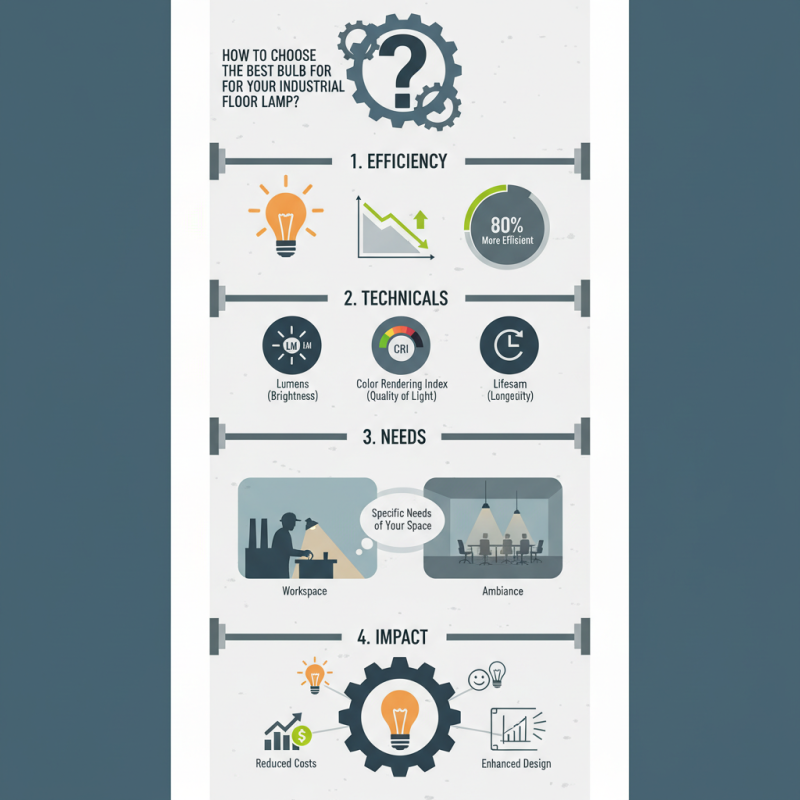
Types of Bulbs Suitable for Industrial Floor Lamps
When selecting a bulb for your industrial floor lamp, consider the available types that suit your space.
LED bulbs are increasingly popular. They provide energy efficiency and long lifespans, making them ideal for brightening large areas.
LEDs emit less heat, which is a bonus for safety in industrial settings. However, they can sometimes produce a harsh light.
Adjusting your choice based on ambiance is essential.
Another option is the incandescent bulb, known for its warm glow.
These bulbs create an inviting atmosphere. However, they consume more energy and have shorter lifespans compared to LEDs.
Some users appreciate the nostalgic feel of incandescent lights. Each bulb type has its advantages and shortcomings.
It’s wise to think about what your space needs and how each bulb might enhance or detract from that goal.
Fluorescent bulbs offer another alternative. They are efficient and great for
large workspaces. However, the color temperature may feel too cool for some. In contrast, halogen bulbs
provide bright, focused light ideal for task-oriented areas. But they may generate
significant heat, requiring caution. Considering these options will empower you to make the best choice for your industrial floor lamp,
promoting both functionality and style.
Considerations for Brightness and Color Temperature
When choosing a bulb for your industrial floor lamp, brightness and color temperature are key. Brightness, measured in lumens, impacts how well you see in your workspace. A higher lumen count means more light. For example, a bulb with 800 lumens works well for general areas, while 1600 lumens suits task-focused zones. Consider the specific tasks in the area and choose accordingly. Too bright can lead to glare, while too dim might strain your eyes.
Color temperature, measured in Kelvin, influences the ambiance of a space. Warmer tones, around 2700K to 3000K, create a cozy atmosphere. Cooler tones, above 4000K, enhance alertness and focus. A mix could be ideal, combining warm light for relaxation with cooler light for productivity. Reflect on how the color temperature affects mood and efficiency in your space.
Experimentation is vital. You may start with standard options and realize they don't fit your needs perfectly. It’s a process of learning what works best for you. Observe how different settings feel with varied bulbs. Sometimes, the ideal choice comes with a bit of reflection and adjustment.
Energy Efficiency: LED vs. Traditional Bulbs
When choosing bulbs for industrial floor lamps, energy efficiency is crucial. LED bulbs stand out for this reason. According to the U.S. Department of Energy, LEDs use at least 75% less energy than traditional incandescent bulbs. This remarkable efficiency translates to lower electricity bills over time. In an industrial setting, where lighting remains on for extended hours, these savings can be significant.
Another critical point is the lifespan of these bulbs. LEDs can last up to 25,000 hours, while traditional bulbs typically last only about 1,000 hours. This means less frequent replacements, reducing maintenance costs. It is essential to consider that not all LED products are created equal. Some may not achieve the advertised efficiency or lifespan. Research and reviews can help identify quality options.
However, the initial cost of LED bulbs can be higher than traditional options. This upfront investment can cause hesitation. Evaluating the long-term savings compared to short-term costs is vital. Not every workspace may be ready to make this transition. Understanding the unique lighting needs of your environment can guide your decision. Aim to balance immediate expenses against future energy savings for optimal results.
How to Choose the Best Bulb for Your Industrial Floor Lamp? - Energy Efficiency: LED vs. Traditional Bulbs
| Bulb Type |
Lifespan (Hours) |
Energy Consumption (W) |
Brightness (Lumens) |
Cost per Year (based on 3hrs/day usage) |
| LED |
25,000 |
10 |
800 |
$10 |
| Incandescent |
1,200 |
60 |
800 |
$66 |
| CFL |
10,000 |
15 |
800 |
$22 |
| Halogen |
2,000 |
50 |
800 |
$57 |
Lumens and Watts: Understanding Light Output Requirements
Choosing the right lighting for an industrial floor lamp involves more than just aesthetics. Understanding lumens and watts is crucial. Lumens measure brightness, while watts measure energy consumption. For industrial spaces, light output is essential for safety and productivity.
According to the U.S. Department of Energy, a well-lit industrial area should have between 50 to 100 lumens per square foot. This can vary based on the specific tasks performed in the space. For instance, detailed work may require around 100 lumens, whereas general movement may only need 50. This data underscores the need for precise calculations when selecting bulbs.
It's important to note that higher wattage does not always equate to better lighting. Many industries are shifting to LED bulbs, which provide more lumens per watt. Reports indicate that LED technology can produce 80-100 lumens per watt, far exceeding traditional incandescent bulbs. However, this transition can challenge legacy systems, requiring reevaluation of existing fixtures and their compatibility with modern bulbs. Balancing these factors ensures an effective lighting environment while promoting efficiency.
Matching Bulb Types with Lamp Designs and Uses
Choosing the right bulb for your industrial floor lamp involves understanding the lamp's design and intended use. Different bulb types offer unique advantages. For example, LED bulbs are energy-efficient and have a long lifespan. Incandescent bulbs, while less efficient, provide warm light that many find inviting.
When selecting a bulb, consider the lamp's ambiance. A warm glow suits relaxed environments, while brighter, cooler light may be needed for workspaces. Pay attention to the bulb's brightness, measured in lumens. A higher lumen count means a brighter light.
**Tips:** Check the wattage compatibility with your lamp. High-wattage bulbs can overheat and damage fixtures. Experiment with different bulb types to find the best fit for your space. Sometimes, the right bulb might not be what you initially expected. Be open to mixing styles and revisiting your choices.
Types of Bulbs for Industrial Floor Lamps
FAQS
: Lumens measure brightness, while watts measure energy consumption. Understanding both is essential for lighting choices.
A well-lit industrial area should have between 50 to 100 lumens per square foot, depending on tasks.
Not necessarily. Higher wattage doesn’t always mean better lighting; choose based on lumens instead.
LED bulbs offer more lumens per watt, making them energy-efficient and cost-effective in the long run.
Transitioning to LED can complicate legacy systems, often requiring a reevaluation of existing fixtures.
LED bulbs provide bright light, while incandescent bulbs offer a warm glow. Choose based on the desired environment.
Using high-wattage bulbs can overheat and damage your lamp fixtures. Check compatibility to avoid issues.
Pay attention to brightness and ambiance. Sometimes, the ideal bulb may differ from your initial choice.
Balance lumens, wattage, and bulb types. Be open to mixing styles and revisiting your lighting choices.
Yes, calculating lumens precisely is key. Overestimating can lead to unnecessary energy use and cost.
Conclusion
When considering how to choose the right bulb for an industrial floor lamp, several factors come into play. First, understanding the types of bulbs that are suitable, such as LED or incandescent, is essential. Each offers distinct benefits in terms of brightness, color temperature, and aesthetics. Brightness should be measured through lumens rather than watts, as this determines the overall light output, while color temperature affects the ambiance created by the lamp.
Energy efficiency is another critical consideration, especially when comparing LED options to traditional bulbs, as LEDs generally consume less power and have a longer lifespan. Lastly, it's important to match the bulb type with the design and intended use of the lamp to achieve the desired functionality and style. By taking these factors into account, one can effectively choose the perfect bulb for their industrial floor lamp.

 LuxPower Light