A small office can feel brighter and more usable with the right adjustable swing arm lamp. How to style an adjustable swing arm lamp in a small office? The answer begins with purpose, not decoration. The lamp should direct light onto your keyboard, notebook, or reading area without crowding the desk.
In my experience, a wall-mounted or clamp-mounted arm saves valuable surface space. Position the shade slightly above eye level, then angle it toward the work surface. This reduces harsh glare on screens and leaves room for a monitor, pen tray, and coffee mug. A warm-neutral LED bulb, around 3000K to 4000K, usually creates comfortable task lighting. Check the lamp’s specifications before choosing a bulb. Not every fixture supports every wattage or bulb shape.
Keep the visual weight balanced. A black metal lamp can anchor a pale desk, while a brass or white finish may soften a compact workspace. Hide excess cable along the rear edge, but avoid tight bends or overloaded outlets. Small details matter.
It may take two or three adjustments.
A common mistake is placing the arm where it looks attractive but blocks movement. Test the lamp while typing, writing, and opening drawers. I have made that mistake myself. The lamp looked excellent in photographs, yet its arm interrupted my monitor view. A practical layout should support daily habits, leave walking space clear, and remain easy to adjust. The following guide explores placement, proportions, finishes, lighting comfort, and simple styling choices for a small office that feels focused rather than cramped.
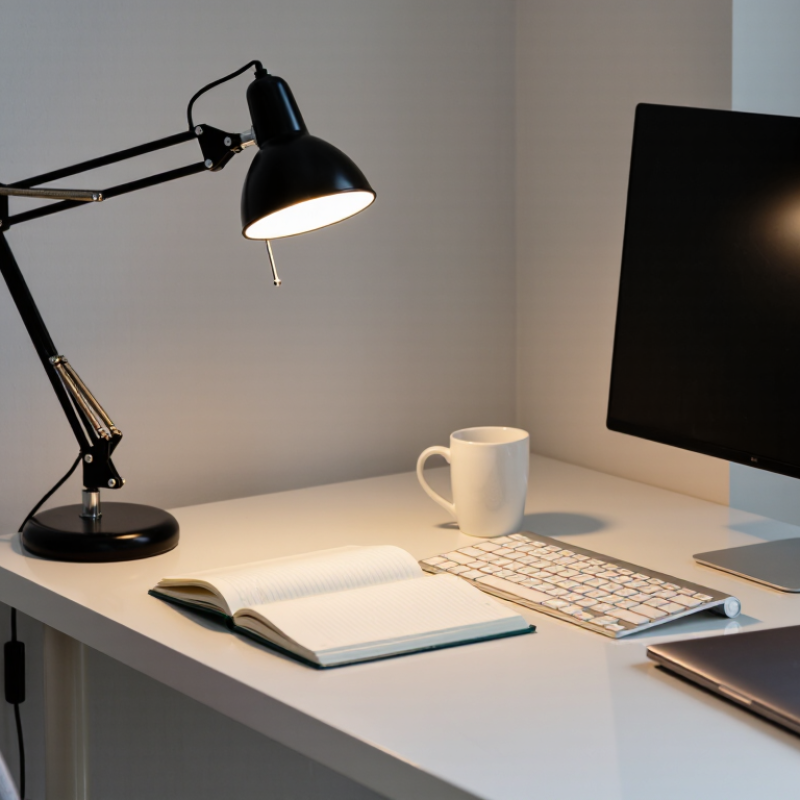
In a small office, choose the lamp by reach, stability, and light quality. Measure your desk before shopping. A compact swing arm should illuminate the keyboard without blocking your monitor. A reach of 18 to 24 inches often suits a narrow workstation. However, desk depth matters more than a fixed measurement.
Stability and Desk Space Look for a sturdy clamp or a weighted base. Clamps save valuable surface space, but they need a firm desk edge. A padded clamp can prevent scratches on painted or wooden surfaces. Check the arm joints carefully. They should move smoothly and remain in position without constant tightening. That detail is easy to overlook.
Brightness and Color Temperature Choose adjustable brightness and a neutral color temperature, usually around 3500K to 4500K. This range can support reading and screen work without feeling overly blue. A shade with a diffuser reduces harsh glare on glossy pages. Position the lamp opposite your writing hand when possible. This placement can limit shadows across your notes.
Keep the cord away from walkways. Avoid placing the lamp directly behind the monitor. It may create distracting reflections. My first choice was a large lamp with impressive reach, but it overwhelmed the desk. Smaller was better. Not perfect, though. I still needed to reposition it during video calls. A flexible arm, quiet joints, and a replaceable bulb can make that daily adjustment less frustrating.
In a small office, placement matters more than decorative style. An adjustable swing arm lamp should illuminate your hands without crowding your monitor. Measure the desk before installing it. Leave a few inches between the lamp base and your keyboard. If the arm is wall-mounted, place the pivot near your writing side, not directly above the screen. This keeps light off the display and reduces distracting reflections.
Test the lamp while sitting in your normal working position. Aim the shade toward the desk surface, keeping the beam slightly in front of your hands. A matte wall behind the monitor can soften harsh contrast during evening work. Adjust the arm so its joints move freely but do not drift. Tighten them carefully. Too much pressure can damage the mechanism. I usually mark two useful positions with removable labels, one for typing and one for reading. It saves adjustment time, although my labels sometimes peel away.
Keep the cable along the rear desk edge with simple clips. Avoid routing it across your knees or beneath a rolling chair. The lamp should not block drawers, vents, or the main walking path. Check shadows from your writing hand before finalizing the position. Left-handed users may need the opposite side. A warm, moderate light can feel comfortable, but brightness preferences vary. Test it for fifteen minutes. The first placement is rarely perfect.
A swing arm lamp can turn a cramped desk into a more workable task zone. Set the arm beside your dominant hand, not directly in front of your eyes. This reduces shadows across notebooks and keyboards. Aim the shade toward the work surface, keeping the bulb outside your direct line of sight. The Illuminating Engineering Society commonly recommends about 300–500 lux for office reading and writing tasks. A small desk meter can check whether your lamp reaches that range. Guessing by eye is surprisingly unreliable.
Adjust the arm and shade for comfortable task lighting throughout the day. Keep the shade roughly 35–50 centimeters above the desk, then tilt it until the page looks bright without harsh reflections. Rotate the arm when switching from writing to a monitor. The CIE’s guidance on glare emphasizes controlling bright sources within the visual field. This matters near glossy screens. I sometimes place the lamp too close, thinking brighter means better. It usually creates a hot spot instead. Leave the surrounding room softly lit, because strong contrast can increase visual discomfort. The American Optometric Association also promotes the 20-20-20 habit during screen work: every 20 minutes, look 20 feet away for 20 seconds.
Tips: Test the lamp for one full work session. Notice squinting, shoulder tension, or screen reflections. If discomfort appears, lower the brightness or move the shade sideways. Check again after sunset, when daylight no longer hides poor positioning.
An adjustable swing arm lamp should look intentional, not merely useful. In a small office, its finish can connect the desk, shelving, and nearby hardware. Choose one repeated material, such as matte black, brushed metal, or warm wood. Repetition creates visual order without making the room feel decorated. Match the lamp shade to the office’s dominant color, then add restrained contrast. A cream shade softens a cool gray wall. A dark shade gives a pale desk sharper definition. Keep the contrast controlled. Too many competing tones make a compact room feel busy.
I usually test the lamp beside the monitor before fixing its position. The arm should reach the writing area without crossing the screen or blocking a window. For focused work, neutral white light often keeps paper and screen colors easier to judge. Warm light feels calmer, but it can make white surfaces appear yellow. I once paired a warm bulb with beige walls, and the corner looked dull at night. That choice needed reconsideration. A small swatch or spare sheet of paper helps reveal the effect before purchase. Keep the cord aligned with the desk edge, and leave enough slack for movement. The lamp can echo one office color, but it should not imitate every object. Let one detail remain unexpected.
| Office Style | Recommended Lamp Finish | Complementary Color Scheme | Shade Shape | Suggested Light Color | Best Placement | Styling Effect |
|---|---|---|---|---|---|---|
| Modern Minimalist | Matte black, white, or brushed metal | White, light gray, charcoal, and natural wood | Simple cylindrical or shallow dome | Neutral white, approximately 3500–4000 K | At the rear corner of the desk, angled toward the work surface | Creates a clean focal point without making the desk appear crowded |
| Industrial | Blackened metal, dark bronze, or aged steel | Concrete gray, rust, dark brown, cream, and walnut | Exposed-bulb cage or broad metal dome | Warm white, approximately 2700–3000 K | Along the back edge of the desk or beside an open shelf | Adds visual weight and reinforces a workshop-inspired atmosphere |
| Scandinavian | Soft white, pale gray, light oak, or satin metal | Warm white, beige, pale blue, sage green, and light wood | Rounded dome or softly tapered shade | Warm white, approximately 2700–3000 K | Near a window or on the side opposite the dominant natural light | Maintains an airy look while adding a comfortable layer of light |
| Mid-Century Modern | Brass, walnut-tone metal, olive, or muted teal | Mustard, olive, terracotta, walnut, cream, and navy | Wide dome or angled cone | Warm white, approximately 2700–3000 K | Behind the monitor or at the end of a compact desk | Echoes furniture lines and introduces a controlled accent color |
| Traditional | Antique brass, bronze, or polished nickel | Ivory, beige, deep green, burgundy, and dark wood | Fabric drum or classic metal shade | Warm white, approximately 2700 K | Beside a bookcase or at the back corner of a writing desk | Softens the workspace and connects with classic furniture finishes |
| Coastal | White, brushed nickel, pale blue, or light natural wood | White, sand, sky blue, sea green, and light gray | Fabric drum or rounded shade | Soft neutral white, approximately 3000–3500 K | On a side table or wall-adjacent section of the desk | Preserves an open, relaxed feeling in a compact room |
| Eclectic | A finish repeated in nearby accessories or artwork | Two or three coordinated colors with one contrasting accent | Distinctive dome, pleated shade, or sculptural form | Adjustable 2700–4000 K, depending on the room mood | At an open corner where the lamp can act as a decorative feature | Adds personality while the swing arm provides practical flexibility |
Practical reference: Use the swing arm to direct light toward the task area, keep the lamp outside the monitor’s direct reflection path, and choose a shade size that leaves clear space around the desk.
A small office benefits from a lamp that moves instead of demanding more desk space. Mount the adjustable swing arm near the rear corner, then direct its shade toward your keyboard or notebook. Keep the central work area open.
The 2023 European Standard EN 12464-1 recommends about 500 lux for many office reading and writing tasks. A movable lamp helps you approach that level without flooding the entire room. Use a warm-neutral LED around 3500–4000K for focused work. I sometimes choose a softer tone late in the day, because strict brightness can feel tiring.
Cable control matters as much as lamp placement. Route the cord along the rear edge, using low-profile clips instead of letting it cross the desk. Leave the lamp’s joints visible and reachable. You should adjust the arm with one hand, without moving a monitor or storage tray.
The U.S. Department of Energy reports that LED lighting uses at least 75% less energy and lasts up to 25 times longer than incandescent lighting. That supports efficient daily use, but energy savings do not excuse glare. Test the lamp from your seated position. Reflections on the screen reveal problems quickly.
Keep the lamp head above eye level when possible. This reduces direct glare and preserves a clearer visual field. The IES Lighting Handbook commonly supports layered lighting, combining ambient and task illumination. One lamp may not solve every shadow. My own setup still creates a dark patch beside the notebook. That flaw is useful. It reminds me to rotate the arm, clear unnecessary objects, and review the desk after sunset.
Place it beside your dominant hand, near a rear corner. Keep the center clear. This reduces shadows across notebooks and keyboards.
Keep the shade about 35–50 centimeters above the work surface. Tilt it until the page looks bright without harsh reflections. Small adjustments matter.
Keep the bulb outside your direct line of sight. Raise the lamp head above eye level when possible. Move the shade sideways if the screen reflects light.
Aim for roughly 300–500 lux for focused desk work. A small light meter is more reliable than judging brightness by eye. Guessing can mislead you.
A warm-neutral LED around 3500–4000K supports focused work. A softer setting may feel better late in the day. Strict brightness can become tiring.
Route the cord along the rear desk edge. Use low-profile clips to prevent crossing the workspace. Leave the arm joints reachable with one hand.
Not always. One dark patch may remain beside the notebook. Rotate the arm, remove nearby objects, and check the desk again after sunset.
Follow the 20-20-20 habit: every 20 minutes, look about 20 feet away for 20 seconds. Watch for squinting, shoulder tension, or screen reflections. My setup still needs occasional correction.
How to style an adjustable swing arm lamp in a small office? Start by choosing a compact lamp with a stable base, smooth arm movement, and a shade that directs light where you need it. Place it near the side of your desk to illuminate documents and work tools without taking up valuable surface space. Positioning it beside or behind your monitor can also help reduce glare and create a more balanced workspace.
Adjust the arm and shade so the light falls across your task area without shining directly into your eyes. Choose a finish and color that complement your desk, walls, and existing office accessories for a cohesive look. Keep the desktop clear by routing the cord neatly and using the lamp’s flexible range instead of adding multiple light sources. With simple adjustments, the lamp can provide comfortable task lighting while making the office feel organized, practical, and visually inviting.
LuxPower Light