In 2026, lighting choices are becoming more deliberate, not merely decorative. According to the International Energy Agency’s Lighting 2022 analysis, lighting uses about 15% of global electricity. That figure makes everyday lamp selection worth examining. The U.S. Department of Energy also reports that LED bulbs use at least 75% less energy than incandescent bulbs. They can last up to 25 times longer. Efficiency matters, but comfort matters too.
What is the difference between a task lamp and a mood lamp? A task lamp delivers focused, useful illumination for reading, drafting, cooking, or detailed assembly. Its shade usually directs light downward, reducing shadows across a keyboard or notebook. A mood lamp creates atmosphere instead. It spreads softer light across a room, often using dimming, colored LEDs, or indirect reflection. Think of a warm glow behind a sofa, not a bright pool over your workspace.
The boundary is not perfectly clean. A dimmable desk lamp can support concentration and relaxation. However, its performance depends on beam angle, glare control, color rendering, and placement. The Illuminating Engineering Society recommends evaluating lighting by the activity, visual comfort, and surrounding surfaces. I have found that a lamp can look beautiful yet strain the eyes after thirty minutes. That experience is easy to overlook. Check the label, test the light at your actual desk, and notice reflections on screens. A fashionable lamp is not automatically a functional one.
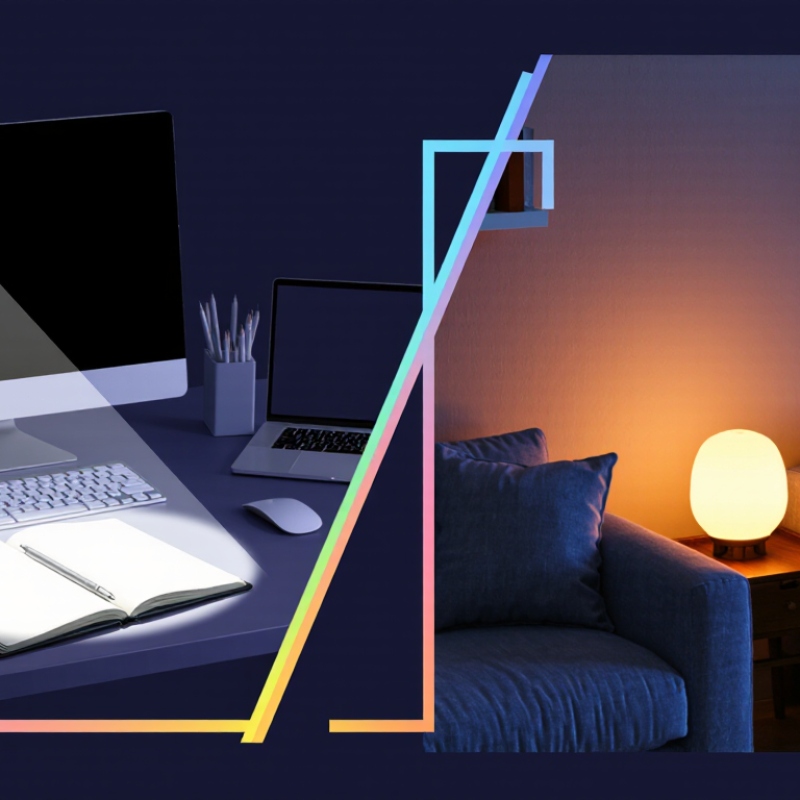
What Are Task Lamps and Mood Lamps?
What Are Task Lamps and Mood Lamps?
Task lamps and mood lamps serve different lighting needs, although one fixture can sometimes do both.
Task Lamps
A task lamp provides focused light for activities such as reading, writing, sewing, or preparing food. Its arm, shade, or swivel head directs light onto a specific area. Adjustable height also helps reduce shadows on the work surface. A suitable task lamp should offer steady brightness, low glare, and accurate color rendering. These details matter when you read small text or match fabric colors.
Mood Lamps
Mood lamps create a softer atmosphere across a room. They may use a shaded design, a warm color temperature, or indirect light reflected from a wall. Instead of lighting one page, they make a living room feel calmer after sunset. A dimmer can make this effect more flexible. Still, brightness alone does not define a mood lamp. A small table lamp can feel atmospheric, while a tall floor lamp can provide useful task lighting.
The Clearest Difference
The clearest difference is where the light goes. Place a lamp beside a book and check whether the page is evenly visible. Place it near a wall and observe whether the room gains a gentle glow.
I once assumed a brighter lamp would always work better, but it produced distracting reflections on glossy paper. That mistake showed me that comfort depends on direction, glare control, and personal eyesight, not brightness alone.
Some lamps sit between both categories. That overlap can be useful, but it may require careful positioning.
How Task and Mood Lamps Differ in Purpose and Design
2026 How to Tell the Difference Between Task and Mood Lamps?
Task and mood lamps differ mainly in purpose and design. A task lamp supports clear, focused work. It belongs beside a keyboard, sketchbook, stove, or reading chair. Its light should reach a specific surface without creating harsh shadows. Adjustable arms, movable shades, and brighter bulbs usually improve control. In my experience, a lamp positioned slightly above and to the side reduces distracting glare.
Mood lamps shape the feeling of a room rather than a particular activity. They often use softer light, warm color temperatures, fabric shades, frosted glass, or indirect illumination. A small lamp on a shelf can make a dark corner feel calmer. It does not need to brighten every detail. Its design may emphasize texture, silhouette, and visual balance instead of precise performance.
The difference is not always absolute. A dimmable task lamp can create a relaxed evening atmosphere, while a decorative lamp may help with light reading. I once chose a beautiful lamp for a narrow desk, but its shade blocked too much useful light. That decision looked good in photographs and worked poorly in daily use. Check the lamp’s height, beam direction, brightness range, and switch location before buying. Also consider the room’s existing light, because reflections from glossy desks or screens can change the result.
How to Compare Brightness, Color, and Light Direction
2026 How to Tell the Difference Between Task and Mood Lamps?
Task lamps are built for seeing details. Mood lamps shape atmosphere. Compare brightness, color, and light direction before choosing either one. The International Energy Agency reports that lighting uses about 15% of global electricity. Efficient light matters, but comfort matters too.
For reading or desk work, look for measurable illuminance. EN 12464-1 commonly specifies 500 lux for office tasks. A task lamp should place light on the work surface, not directly into your eyes. Check lumens, but do not trust them alone. A 600-lumen lamp may feel weak if its beam spreads widely. Adjustable arms and shades help direct light toward paper, tools, or a keyboard. Mood lamps usually use softer output, often below practical task levels. Their wider glow reduces harsh contrast.
Color changes the room’s emotional temperature. Around 2700K feels warm and restful, while 4000K appears cleaner and more active. The U.S. Department of Energy notes that modern LED products can exceed 100 lumens per watt, but efficiency does not guarantee pleasant light. Look for a high color rendering index, preferably above 90, when colors must look natural. The CIE warns that CRI has limitations, so skin tones and painted surfaces still deserve a real-world test.
Tips: Place the task lamp slightly to your side. Keep the shade below eye level. Test the lamp at night. I still misjudge brightness from packaging photos. A dark desk may need more light than expected, while a pale wall can create distracting glare.
2026 How to Tell the Difference Between Task and Mood Lamps?
Compare brightness, color temperature, and light direction using representative lighting targets for focused work and ambient atmosphere.
Task lamps typically provide about 750 lux on the work surface, use a neutral-white color temperature near 4000K, and concentrate light within an approximately 60° beam. Mood lamps generally produce around 100 lux, use warmer light near 2700K, and spread light more broadly at about 120°.
Where to Use Task Lamps and Mood Lamps
Task and Mood Lamps: Where to Use Them
Task lamps belong where your eyes perform precise work. Place one beside a keyboard, sewing machine, reading chair, or kitchen preparation area. The light should fall from the opposite side of your writing hand. This reduces shadows across the page. A movable head also helps you control glare on screens and glossy surfaces. In my experience, a lamp positioned too far behind the shoulder creates more contrast than comfort. Measure the work area before choosing brightness. A very bright bulb is not automatically better.
Mood lamps serve a different purpose. Use them beside a sofa, on a hallway console, or near a bed. Their softer glow can make a large room feel calmer without lighting every corner. Frosted shades, warm color temperatures, and indirect placement usually create gentler results. A lamp aimed at a wall can produce a quiet pool of light. It works well during evening conversations.
Mix both types in open rooms. A desk may need focused light, while a nearby shelf needs a softer accent. Keep mood lighting away from places requiring detailed vision. That mistake can make reading tiring. I once relied on a decorative lamp beside a chair and ignored the dark page beneath it. The room looked attractive, but the setup failed its practical purpose. Check the light from seated and standing positions. Small changes often improve comfort more than expensive fixtures.
How to Choose the Right Lamp for Each Lighting Need
Choosing the right lamp begins with identifying the activity. A task lamp should support reading, drawing, cooking, or computer work. Look for focused, adjustable light that reaches the work surface without shining into your eyes. A brightness range of about 500 to 1,000 lumens often suits detailed tasks. Choose a neutral white tone near 3500K to 4500K for clear visibility. That matters.
A mood lamp serves a different purpose. It softens the room and creates visual comfort rather than sharp focus. Place it beside a sofa, behind a cabinet, or on a low shelf. Warm light near 2200K to 3000K can make wood, fabric, and skin tones appear more inviting. Frosted shades reduce glare. Dimmers offer better control when daylight changes. Keep it simple.
In my experience, one lamp rarely solves every lighting need. I once used a bright desk lamp beside a television, and the reflections became tiring within minutes. A layered setup worked better: focused light near the chair, gentle ambient light across the room, and a small accent source near the wall. Check the color rendering index when appearance matters, especially for art, makeup, or food preparation. Higher ratings usually show colors more naturally, though numbers alone cannot predict personal comfort. Test the lamp at night, from your usual sitting position, before deciding.
FAQS
A task lamp provides focused light for reading, writing, sewing, cooking, or computer work. Its adjustable arm directs light onto a desk or countertop. Good task lighting reduces shadows and eye discomfort.
A mood lamp creates a softer atmosphere across a room. Warm light, shaded covers, and wall reflections can make evenings feel calmer. It does not need to illuminate one page sharply.
Yes, some lamps can serve both purposes. Positioning matters more than the lamp’s label. A swivel head may light a book, then wash a nearby wall with a gentle glow.
About 500 to 1,000 lumens often suits detailed activities. Brightness is not everything. Excessive light can create reflections on glossy paper or screens.
Neutral white light near 3500K to 4500K supports clear reading and detailed work. Warm light near 2200K to 3000K feels more comfortable in living spaces. Personal preference still matters.
Try a side table, low shelf, or position behind a cabinet. A nearby wall can receive reflected light and spread a gentle glow. Avoid placing it directly in your eyes.
Choose a frosted shade or adjustable head. Keep the bulb outside your direct line of sight. I once chose a brighter lamp, but glossy pages became tiring within minutes.
Yes, test the lamp at night from your usual chair or desk. Check brightness, shadows, reflections, and color appearance. Numbers help, but they cannot predict every person’s comfort.
It matters when matching fabric, preparing food, applying makeup, or viewing artwork. A higher color-rendering rating usually shows colors more naturally. Still, I may have trusted ratings too much without testing the actual light.
Conclusion
Task lamps and mood lamps serve different lighting needs. What is the difference between a task lamp and a mood lamp? A task lamp is designed to provide focused, practical illumination for activities such as reading, writing, studying, crafting, or working. It usually has adjustable positioning, a brighter output, and a light direction that can be aimed at a specific area. A mood lamp, in contrast, is intended to create atmosphere, comfort, and visual warmth. It generally produces softer, more diffused light and may use gentle colors or decorative forms.
When choosing between them, consider the purpose, brightness, color temperature, and direction of the light. Task lamps work well on desks, bedside tables, kitchen counters, and work areas where clear visibility is essential. Mood lamps are suitable for living rooms, bedrooms, dining spaces, and relaxation areas where a calm environment matters more than detailed visibility. The best choice depends on whether you need functional lighting, atmospheric lighting, or a combination of both.

 LuxPower Light