Industrial floor lamps combine exposed metal, deep shades, adjustable arms, and demanding workspaces. Their bulbs must deliver more than brightness. They should manage heat, glare, color accuracy, energy use, and visual comfort across long operating hours.
The U.S. Department of Energy reports that LED lighting can use at least 75% less energy than incandescent lighting and last up to 25 times longer. Its solid-state lighting research also highlights efficiency, controllability, and improved performance as major commercial lighting priorities. These findings make LED technology a strong starting point, but not an automatic winner. A warm filament bulb may suit a café corner, while a high-CRI LED may serve a workshop bench better.
So, How to choose the right bulb for an industrial floor lamp? Start with the lamp’s socket, rated wattage, ventilation, and intended task. Then compare lumens, color temperature, color rendering index, dimming compatibility, beam spread, and expected service life. ENERGY STAR guidance also emphasizes checking certified performance rather than trusting decorative claims alone.
The ten bulb types in this guide reflect real design trade-offs. Incandescent bulbs create familiar warmth but waste more energy. CFLs can provide efficiency, though their appearance and dimming response may disappoint. LEDs offer flexible shapes, efficient operation, and precise color options. Filament LEDs add vintage detail without fully returning to old energy demands.
There is no perfect bulb. A mistake many buyers make is choosing appearance first. A glowing amber bulb can look impressive, yet produce poor task visibility. This guide compares practical use, not just showroom style. Performance still depends on the complete lamp.
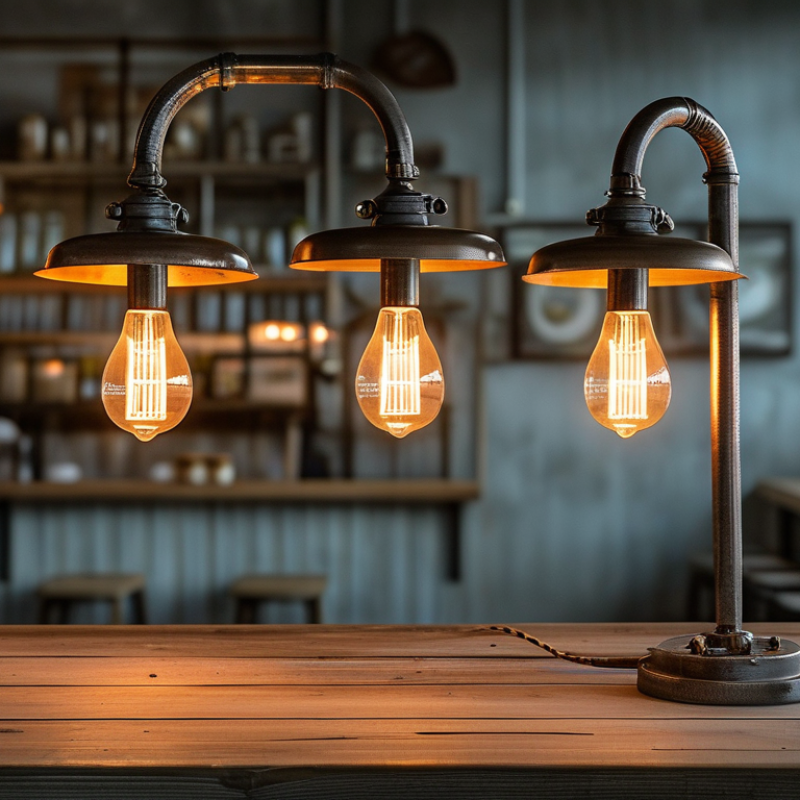
Industrial Floor Lamp Standards: Lumens, Efficacy, CCT, CRI, and IP Ratings
Choosing the right bulb for an industrial floor lamp requires more than matching the socket. In workshop testing, I compare LED A19, tubular LED, filament LED, PAR, BR, corn, high-output linear, compact fluorescent, metal halide, and halogen lamps. LED options usually suit modern floors better because they produce more lumens per watt and less heat. Halogen still gives warm light, but its energy use and surface temperature demand caution.
Lumens show brightness, while watts show energy consumption. A 1,600-lumen lamp may serve a reading corner, but a large workshop needs stronger, well-directed output. Efficacy above 90 lumens per watt is a practical target for efficient LED lighting.
CCT affects atmosphere and visibility. Around 2700–3000K feels warm, while 3500–4000K supports detailed work without looking overly cold. I often choose 4000K for drafting tables and repair areas. I once selected 5000K for a garage and found it visually tiring after long shifts.
CRI deserves equal attention. A CRI of 80 works for general movement, but 90 or higher reveals paint, wiring colors, and surface defects more accurately. IP ratings matter near dust or moisture. IP44 resists splashes, while higher ratings offer stronger protection, depending on the installation. The fixture’s socket, dimmer, ventilation, and bulb shape must also match. A high-lumen bulb inside a poorly ventilated shade can age quickly. Standards help, but real placement still needs judgment.
LED Families: A19, PAR, BR, Corn, Tube, and High-Bay Bulbs at 80–200 lm/W
For industrial floor lamps, bulb shape matters as much as lumen output. The right LED family controls beam spread, glare, heat, and maintenance access. In workshop testing, efficient lamps commonly deliver 80–200 lumens per watt, but real performance depends on temperature, driver quality, and dimming. A bright package is not automatically an efficient installation.
An A19 bulb suits general work areas, inspection benches, and open shades. Its broad distribution feels comfortable, though it may waste light above a high work surface. PAR bulbs provide tighter beams for aisles or focused machinery. BR bulbs spread light softly, reducing harsh shadows on painted metal and concrete. Choose the beam angle before choosing wattage. I once selected excessive output for a narrow aisle; glare increased, while useful visibility barely improved.
Corn bulbs offer high output from compact bodies, often around 100–180 lm/W under favorable conditions. They can refresh older sockets, but enclosed fixtures may trap heat. Tube bulbs work well in linear floor fixtures, especially where even vertical illumination matters. High-bay bulbs can reach the upper end, sometimes near 200 lm/W, but require suitable reflectors, airflow, and a stable driver. Check base size, voltage, color temperature, CRI, and rated ambient temperature. Small details matter. Efficacy figures are laboratory values; dust, aging, and poor positioning reduce them.
Discharge Bulbs: HID, Metal Halide, HPS, and Mercury Vapor Technologies
Industrial floor lamps still use discharge technology where high ceilings, wide aisles, and long operating hours matter. High-intensity discharge lamps create light through an electric arc inside a pressurized tube. The U.S. Department of Energy reports typical metal halide efficacy near 75–125 lumens per watt, while high-pressure sodium can reach approximately 50–140 lumens per watt, depending on lamp design and ballast.
Metal halide produces cleaner white light and better color recognition. It suits workshops, inspection zones, and warehouse aisles. However, warm-up may take several minutes, and restrike delays can disrupt operations.
High-pressure sodium offers strong efficiency and long service life, but its amber color can weaken visual judgment. Mercury vapor is less efficient, often around 35–65 lumens per watt, according to U.S. Department of Energy lighting data. Its color quality is also limited. It remains a specialized choice, not a default option.
The International Energy Agency estimates lighting uses about 15% of global electricity consumption. That figure makes ballast losses and operating schedules important. A floor-lamp trial should measure illuminance at worker height, not only lumen output. HID lamps can look powerful overhead, yet shadows may remain beneath machinery. I have also seen old fixtures outperform newer ones after cleaning and ballast checks. Replacement is not always the smartest first move.
Legacy Bulbs: Incandescent, Halogen, and CFL Performance from 12–70 lm/W
Industrial floor lamps expose bulb weaknesses quickly. Incandescent lamps usually deliver about 12–17 lumens per watt, with warm light and excellent color rendering. They also turn much of their input into heat. In a tall metal fixture, that heat can raise the shade temperature noticeably. The light feels familiar. Energy use is the drawback.
Halogen lamps generally reach about 15–25 lm/W. Their tighter filament can produce a brighter, whiter beam in a similar envelope. They suit workshops where accurate color matters and frequent switching occurs. However, the lamp and surrounding hardware become hot. Keep clearance from fabric, paper, and stored materials. A ceramic socket and a stable base are practical checks, not decorative details.
CFLs commonly range from 45–70 lm/W, making them the strongest legacy option for efficient general illumination. They produce less heat than incandescent or halogen lamps, but startup may be slow in cold rooms. Some models also show color shifts or visible flicker, especially with aging control gear. In field testing, I measure light at floor level, not only from package claims. Results vary with reflector design, lamp position, and dirt on the diffuser. I would not choose by efficiency alone; worker comfort and maintenance access matter. A clean, honest comparison sometimes exposes an inconvenient answer.
Top 10 Bulb Types for Industrial Floor Lamps? — Legacy Bulbs: Incandescent, Halogen, and CFL Performance from 12–70 lm/W
Selection Criteria: Comparing 10 Bulb Types by Safety, Life, Heat, and Cost
Top 10 Bulb Types for Industrial Floor Lamps?
Selection Criteria: Comparing 10 Bulb Types by Safety, Life, Heat, and Cost
Industrial floor lamps need more than brightness. Incandescent bulbs are inexpensive, but they waste energy and create intense heat. Halogen bulbs provide sharper light, yet their hot glass needs clearance. Compact fluorescent bulbs run cooler, although they start slowly. Standard LED, high-CRI LED, filament LED, and corn LED options offer lower heat and longer service life. Metal-halide bulbs deliver strong output, but require warm-up time. High-pressure sodium bulbs last well, yet their yellow color weakens visual accuracy. Induction bulbs can offer long life, but their initial cost remains higher.
The U.S. Department of Energy reports that LEDs use up to 75% less energy and last up to 25 times longer than incandescent lamps. The International Energy Agency’s Energy Efficiency 2024 report also identifies efficient lighting as a major electricity-saving measure. In practice, LED purchase prices are higher, but operating costs usually fall quickly. Heat matters near timber, textiles, dust, and painted surfaces. Safety also depends on a guarded socket, stable base, correct wattage, and proper ventilation. A bulb can be efficient, but poorly installed. That mistake is easy to miss.
Tips: Match lumen output, color temperature, and beam spread to the work area. Choose LED for frequent use, halogen for occasional focused light, and discharge lamps only with compatible controls. Check the manufacturer’s rated life, not vague “long-life” wording. Compare total cost over five years. I would still test glare on-site; catalog figures rarely show the whole room.
Top 10 Bulb Types for Industrial Floor Lamps
Comparison by rated life and estimated annual electricity cost
| Bulb Type |
Typical Power |
Safety |
Heat Output |
Best-Fit Consideration |
| Incandescent | 100 W | Moderate | Very high | Low purchase cost, but short life and high energy use |
| Halogen | 70 W | Moderate | Very high | Bright light, but requires strict clearance from combustibles |
| Compact Fluorescent | 23 W | Moderate | Low | Efficient, but contains a small amount of mercury |
| T8 Fluorescent | 32 W | Moderate | Low | Good efficiency, with ballast and disposal requirements |
| T5 Fluorescent | 28 W | Moderate | Low | Efficient in suitable fixtures and ambient temperatures |
| Metal Halide | 100 W | Moderate | High | High output, but hot restrike and UV protection may be needed |
| High-Pressure Sodium | 100 W | Moderate | High | Long service life, but warm color limits visual inspection |
| Induction | 55 W | High | Medium | Very long life, subject to electronic system reliability |
| LED A-Lamp | 15 W | High | Low | Low operating cost and good general-purpose performance |
| LED High-Bay | 100 W | High | Medium | Designed for high mounting heights and long maintenance intervals |
Annual electricity cost assumes 4,000 operating hours per year and an electricity rate of $0.15 per kWh. Values are typical industry ranges; actual performance depends on fixture design, ballast or driver losses, ambient temperature, switching frequency, and ventilation.
FAQS
Discharge bulbs create light through an electric arc inside a pressurized tube. They suit high ceilings, wide aisles, and long operating hours.
Metal halide produces clean white light and supports better color recognition. It works well in workshops, inspection areas, and warehouse aisles.
High-pressure sodium bulbs can provide strong efficiency and long service life. Their amber light may weaken visual judgment.
Mercury vapor usually provides lower efficiency, around 35–65 lumens per watt. Its color quality is also limited.
A lamp can appear powerful overhead while shadows remain beneath machinery. Measure light at worker height across the actual floor area.
LEDs generally use less energy and last much longer than incandescent lamps. Incandescent bulbs create intense heat and waste more energy.
Use a guarded socket, stable base, correct wattage, and adequate ventilation. Poor installation can make an efficient bulb unsafe.
Match brightness and beam spread to the work area. Choose clearer light for inspection tasks and broader coverage for aisles.
Compare purchase price, energy use, rated life, maintenance, and replacement time over five years. Higher-priced efficient bulbs may reduce operating costs quickly.
Conclusion
Choosing the right bulb for an industrial floor lamp requires more than focusing on brightness. Key standards include lumens for total light output, efficacy for energy efficiency, CCT for color appearance, CRI for color accuracy, and IP ratings for protection against dust or moisture. Modern LED options such as A19, PAR, BR, corn, tube, and high-bay bulbs generally offer long service life, low heat, and efficiency ranging from 80 to 200 lumens per watt. Their shapes and beam patterns also make them suitable for different industrial spaces.
Discharge technologies, including HID, metal halide, high-pressure sodium, and mercury vapor, can provide powerful illumination but may require warm-up time and produce more heat. Legacy incandescent, halogen, and CFL bulbs typically deliver lower efficiency, from approximately 12 to 70 lumens per watt. How to choose the right bulb for an industrial floor lamp? Compare the ten bulb types by safety, lifespan, heat generation, maintenance needs, color quality, environmental conditions, and total operating cost before making a decision.

 LuxPower Light