Replacing a rechargeable table lamp battery sounds simple, but the correct method depends on the lamp’s design. Some models use a removable battery pack, while others contain a protected lithium-ion cell inside a sealed base. Before opening anything, check the user manual, model number, charging label, and replacement specifications. A battery with the wrong voltage, connector, or chemistry can damage the lamp or create a serious safety risk.
This guide explores the top 10 ways to approach the replacement process, from using an original manufacturer battery to working with a qualified repair technician. It also explains how to identify fading capacity, intermittent charging, swollen cells, and loose internal connections. How to replace the battery in a rechargeable table lamp? The answer begins with careful inspection, not force. Disconnect the charger, switch off the lamp, and photograph each wire before removing it. Small details matter.
In practical repairs, the safest solution is not always the cheapest one. A compatible battery may fit perfectly yet lack suitable protection circuitry. Some lamps are difficult to reseal, and a poor seal can affect stability, charging safety, or everyday durability. I have also found that users sometimes replace a weak battery when the real problem is a damaged charging port. That possibility deserves attention. Stop immediately if the battery looks swollen, hot, cracked, or smells unusual. When the design is sealed or unclear, professional assessment remains the most reliable choice.
Identify the Lamp’s Battery Type and Replacement Requirements
Replacing a rechargeable table lamp battery begins with identification, not guesswork. Remove the lamp’s cover only if the manual permits it. Photograph the battery label, connector, and wiring before disconnecting anything. Record its chemistry, such as lithium-ion or nickel-metal hydride, plus nominal voltage, capacity, dimensions, and polarity. A similar-looking pack may still be unsafe. IEC 62133-2 requires portable rechargeable cells and batteries to meet specific safety tests, including overcharge and short-circuit protection. That matters inside a warm, enclosed lamp.
Industry data also shows why careful matching matters. The International Energy Agency reported that global lithium-ion battery demand exceeded 750 GWh in 2023, growing about 40 percent from 2022. Larger production does not make every replacement universal. Select a pack with the same chemistry and voltage. Match the connector, charging method, protection circuit, and temperature-sensor arrangement. Capacity can be equal or slightly higher only when the charger supports it. Never force a connector.
Tips: Check the charger’s output label. Compare it with the original battery requirements. A protected pack is preferable. Avoid loose cells and damaged insulation. If the label is missing, stop and ask a qualified repair technician. I once treated capacity as the main specification; that was incomplete. Connector polarity and charging control can matter more. Also inspect swelling, heat marks, or a chemical smell. Do not reuse a compromised pack. After replacement, monitor the first charge on a clear, nonflammable surface. Test gently.
Gather Tools and Follow Essential Battery Safety Procedures
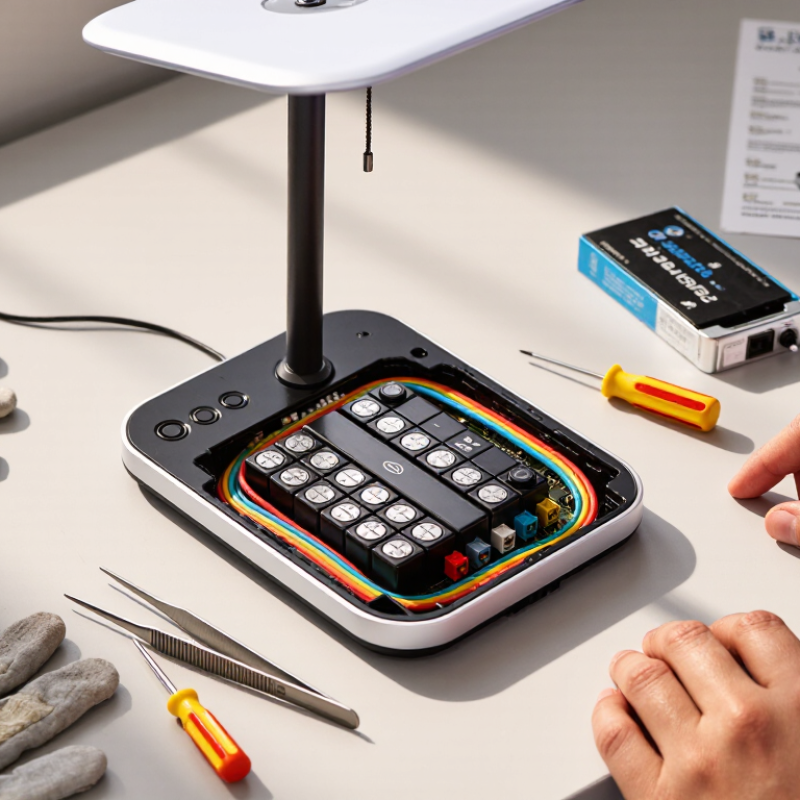
Replacing a rechargeable table lamp battery starts with preparation, not guesswork. Gather a small screwdriver set, insulated tweezers, safety glasses, a digital multimeter, and a clean work surface. Keep the lamp unplugged and switch it off before opening the housing. Photograph each wire and connector, because memory becomes unreliable during a small repair. I still recheck these photos twice.
Check the battery label for its chemistry, voltage, capacity, and connector shape. The replacement must match the lamp’s electrical requirements, not merely fit the compartment. Never puncture, bend, crush, or heat a rechargeable cell. Stop immediately if the battery looks swollen, leaks, smells unusual, or feels hot. Move away from it and contact an approved battery recycling service. Do not place a damaged cell in household waste.
Use insulated tools near exposed terminals, and prevent metal objects from touching both contacts. A multimeter can help confirm polarity, but incorrect settings may damage the meter or battery. Work in a dry, ventilated area without candles, heaters, or loose metal parts nearby. Secure every connector before closing the lamp, then test it briefly while watching for heat, smoke, or unusual sounds. If the wiring is unclear, professional service is safer than an uncertain repair.
Compare Ten Replacement Methods for Common Table Lamp Designs
Top 10 Ways to Replace a Rechargeable Table Lamp Battery
Compare Ten Replacement Methods for Common Table Lamp Designs
A rechargeable table lamp may use lithium-ion, lithium iron phosphate, or nickel-metal hydride cells. Chemistry matters. So does voltage. The Global E-waste Monitor 2024 reported 62 million tonnes of electronic waste in 2022, with only 22.3% formally collected and recycled. Repairing a suitable lamp can reduce unnecessary disposal, but battery compatibility must guide every choice.
Ten replacement methods suit different lamp designs: an identical-specification battery pack preserves the original circuit; individual cell replacement costs less but requires specialist tools; a protected pack adds safer charge control; a matching battery holder simplifies future changes; a USB-C charging module modernizes older lamps; an external power bank supports USB-powered designs; an external battery pouch suits detachable lamps; a regulated DC adapter converts the lamp to mains power; a solar-charging module helps outdoor models; and a complete power-module replacement restores sealed units. Each method has trade-offs. Fit matters. That shortcut fails.
Check the original voltage, capacity, connector, polarity, and charging method before ordering parts. A higher-capacity cell may exceed the charger’s limits. A lower-voltage substitute may cause flickering or permanent damage. Lithium battery work should follow IEC 62133-2 principles and use insulated tools, current protection, and physical restraints. Cell-level rebuilding is not a casual weekend task. I would choose a matching protected pack for most portable lamps, while a regulated adapter suits fixed bedside designs better. The comparison is imperfect because manufacturers often hide circuit details. Photograph the wiring before removal, and test the lamp under supervision.
Install and Secure the New Rechargeable Battery
Replacing a rechargeable table lamp battery demands more than matching voltage. The new cell must share the original chemistry, voltage, connector, dimensions, and protection circuit. IEC 62133-2 covers safety testing for portable sealed secondary lithium cells and batteries. Treat it as a practical baseline, not decoration.
Unplug the lamp and photograph the wiring before removal. Check polarity twice. The red wire usually connects to positive, but never trust color alone. Seat the battery in its original compartment, with no sharp edges pressing against the pouch. Use the specified insulating pad or nonconductive spacer. Do not crush, bend, puncture, or loosely tape the cell. A loose battery can rattle against the housing during daily use.
Secure the pack with a battery-rated adhesive strip or firm mechanical bracket. Keep wires away from hinges, switches, and hot charging components. The U.S. Consumer Product Safety Commission reports that lithium-ion battery incidents often involve overheating, short circuits, or damaged cells. Small mistakes matter. After installation, inspect for swelling, odor, heat, or unexpected charging behavior. Stop immediately if any appears. Charge the lamp on a clear, dry surface, not under fabric. The International Energy Agency reported that lithium-ion battery demand exceeded 750 GWh in 2023, showing how widely this technology is used, but wider use does not remove installation risks. My own habit is to test the lamp for ten minutes, then check the battery area by touch. That check is simple, and imperfect, but useful.
Test the Lamp and Recycle the Old Battery Properly
A rechargeable table lamp often needs a battery replacement when its light fades quickly or stops charging. I check ten details before opening the housing: battery chemistry, voltage, capacity, size, connector, polarity, protection circuit, cable condition, charging behavior, and heat. The replacement must match the original electrical specifications. A higher capacity is not automatically safer. Never puncture, crush, solder, or force a swollen battery. Stop there.
After fitting the new battery, test the lamp on a clear, nonflammable surface. Confirm that the lamp turns on, charges normally, and reaches steady brightness. Watch for unusual heat, odor, flickering, or a loose connection during a thirty-minute test. Check the charging port and switch gently. A small mistake matters. I once focused too much on brightness and overlooked a damaged cable, which could have caused repeated charging problems.
Old rechargeable batteries should not go into household trash or ordinary recycling bins. Tape exposed terminals with nonconductive tape, place the battery in a separate plastic bag, and keep it away from metal objects. Do not store a damaged or swollen cell indoors for long. Contact a local household hazardous-waste center or an authorized battery collection point, and follow its packaging instructions. Recycling staff need accurate information, so identify the battery type when possible. If the chemistry is unknown, report that clearly. Clean handling protects workers, collection vehicles, and the environment.
Top 10 Ways to Replace a Rechargeable Table Lamp Battery
Compare the nominal voltage of common rechargeable battery chemistries before replacing a table-lamp battery.
First test the lamp and confirm whether the battery, charger, switch, or wiring is faulty. Read the original battery label, match its chemistry and voltage, and use a compatible protected replacement. Common nominal cell voltages are approximately 1.2 V for NiMH and NiCd, 3.2 V for LiFePO4, and 3.6 V for lithium-ion batteries. Do not puncture, burn, or place rechargeable batteries in household trash; take the old battery to an approved battery-recycling collection point.
FAQS
Check the original chemistry, voltage, capacity, connector, polarity, and physical dimensions. Fit matters. Do not guess.
Common options include lithium-ion, lithium iron phosphate, and nickel-metal hydride cells. Their charging requirements are different.
No. A larger capacity may exceed the charger’s limits or change charging behavior. Matching specifications is safer.
A matching, protected battery pack usually preserves the original circuit. It should fit securely inside the existing compartment.
Cell-level replacement requires specialist tools, insulation, current protection, and experience. It is not a casual weekend task.
A compatible charging module can modernize some older designs. Confirm voltage, current, polarity, and circuit compatibility beforehand.
A regulated DC adapter may suit a fixed lamp better than a rechargeable battery. The adapter must match the lamp’s electrical requirements.
Unplug the lamp and photograph the wiring. Check polarity twice. Use an insulating spacer and firm battery-rated support.
Stop if you notice swelling, odor, unusual heat, or strange charging behavior. Move the lamp away from fabric and flammable surfaces.
Test it for about ten minutes on a clear, dry surface. Check the battery area by touch afterward. This check is imperfect, but useful.
Conclusion
This guide explains How to replace the battery in a rechargeable table lamp? Start by identifying the lamp’s battery chemistry, voltage, capacity, connector, and physical size, then confirm the replacement requirements from the lamp’s markings or instructions. Prepare basic tools such as insulated screwdrivers, gloves, and a nonconductive work surface. Before opening the lamp, switch it off, disconnect it from power, and allow the battery to cool. The article compares ten practical replacement approaches for common table lamp designs, including matching a direct replacement, using a compatible battery pack, replacing the connector, and seeking qualified repair assistance when the battery is sealed or difficult to access.
After selecting a suitable battery, install it with the correct polarity, secure it so it cannot move, and keep wires away from sharp edges or heat-producing parts. Reassemble the lamp carefully, charge it under observation, and test its lighting, charging, and switch functions. Finally, handle the old rechargeable battery responsibly by placing it in an approved battery-recycling collection point rather than disposing of it with ordinary household waste.

 LuxPower Light